
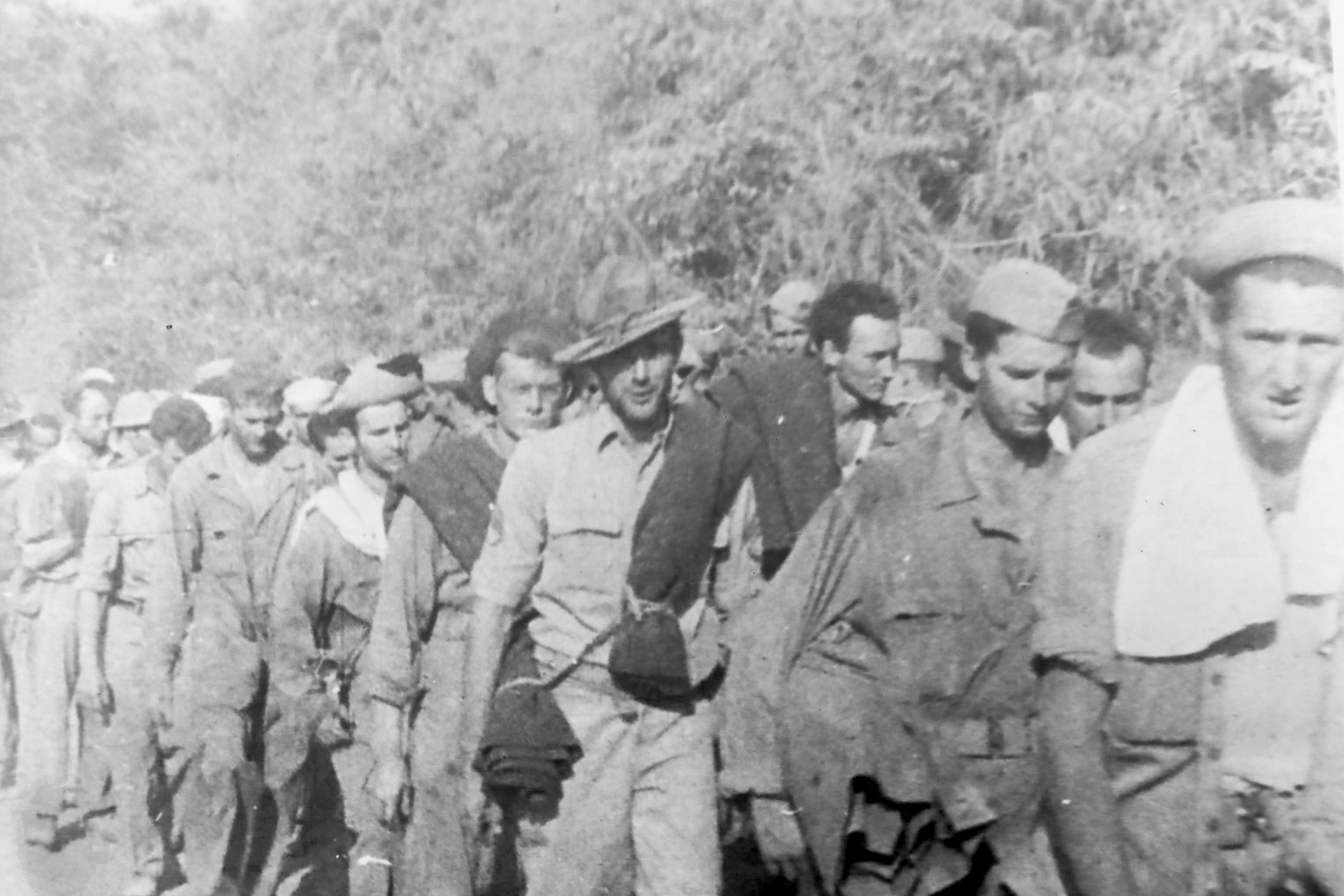
84 Years Since Bataan Fell
A tribute to the New Mexico National Guard's Bataan veterans and the rural co-op counties they called home. This month marks 84 years since the fall of Bataan—and the same cooperative spirit that kept soldiers alive in Japanese captivity later built New Mexico's rural electric cooperatives.
This month marks 84 years since the fall of Bataan in the Philippines. What is now known as the Bataan Death March, one of the most brutal forced marches in modern military history, began April 9, 1942. Thousands of American and Filipino defenders—already weakened by months of hunger and disease—were taken prisoner by Japanese forces, and many were driven into the march.
Two of New Mexico's National Guard units, the 200th and 515th coast artillery regiments, paid a staggering price. The stories that survived are not just military history. They are community history.
Many of the men who fought on Bataan and suffered in Japanese captivity came from the same rural counties co-ops serve today. The cooperative spirit was not a slogan for them. It was how they stayed alive. They shared what they had, they carried each other, and they refused to leave one another behind.
Some of their stories were shared in "Beyond Courage: One Regiment Against Japan, 1941–1945," a book by Dorothy Cave. A few of these stories are highlighted below.
When you read these accounts side by side, the overlap with co-op country goes beyond geography. Rural New Mexico was home to citizens accustomed to making do, sharing what they have and relying on neighbors. On Bataan and in the camps, those habits became life-or-death decisions—giving away rations, stealing food to share, carrying the weak and staying with the unit when escape was possible.
That same community DNA later built New Mexico's electric cooperatives—member-owned organizations that exist because rural communities chose to organize, invest together and not leave one another behind.
In 2026, commemorating the 84th year since Bataan's fall is an opportunity to remember the cooperative spirit is not abstract. In New Mexico, it has a face, a hometown and, in too many cases, a grave.
Where Bataan History Overlaps with Today's Co-op Counties
Central Valley Electric Cooperative — Chaves and Surrounding Counties
Central Valley Electric serves members in Chaves, Eddy, Lea and Otero counties. Chaves County—and Roswell in particular—sent many soldiers who would endure Bataan and captivity under conditions that rewarded only one thing: loyalty to the man next to them.
Capt. Frederick B. Ted Howden Jr., 200th Coast Artillery, Roswell / Chaves County
Frederick, a chaplain attached to the New Mexico National Guard, refused an opportunity to evacuate from Bataan, saying, "They are my boys, and I will stay with them." After capture, he repeatedly gave his already meager rations to other prisoners of war.
A passage in "Beyond Courage: One Regiment Against Japan, 1941–1945," reads:
"Howden died sharing his food with others who he insisted needed it more. His old friend, an honorary member of the regiment, Father Albert Braun, nursed him, administered last rites, and read the funeral service. Someone sounded 'Taps.' The New Mexicans buried their own."
Farmers' Electric Cooperative — Curry, DeBaca, Guadalupe, Harding, Quay, Roosevelt and San Miguel Counties
Farmers' Electric serves a wide sweep of Eastern and North-Central rural New Mexico, including Harding and San Miguel counties. Bataan veterans from these areas have accounts describing comrades literally carrying one another to keep moving.
José Fuljencio Martinez, 200th Coast Artillery, Mosquero (Harding County) / Las Vegas (San Miguel County)
José was born in Mosquero and spent part of his youth in Las Vegas. He recounts prisoners trying to keep an exhausted comrade from sitting down during the march because everyone understood what sitting down could mean. When the man finally sat, a Japanese guard bayoneted him in front of the formation.
José's account captures a recurring theme: men taking risks and spending their own strength to keep others on their feet.
Santa Fe County — Served in rural areas by Central New Mexico Electric Cooperative, Jemez Mountains Electric Cooperative and Mora-San Miguel Electric Cooperative
Santa Fe County is a reminder that Bataan's story is not confined to one corner of the state. Multiple co-ops serve rural areas of Santa Fe County today, and Santa Fe produced Bataan veterans whose survival depended on high-risk sharing.
Arthur B. Smith, 200th Coast Artillery, Santa Fe
Arthur described how prisoners inside Japanese camps stole and shared food. Starvation was constant, and official rations were not enough to live on. "That's how we would help each other out," he explained.
In a place where theft could lead to severe beatings or worse, sharing food was both a survival tactic and a moral choice.
Jemez Mountains Electric Cooperative — San Juan County and Northern New Mexico
JMEC serves members across several of New Mexico's northern counties, including San Juan County. National guardsmen from the northern half of the state, distant from major installations, faced captivity and years of brutal confinement in Bataan.
Sgt. Joe Lee Kieyoomia, 200th Coast Artillery, San Juan County
Joe, a Navajo soldier in New Mexico's 200th, survived the Bataan Death March and years of imprisonment marked by interrogation and harsh punishment. His story underscores how New Mexico's Bataan experience spanned the state, including Native communities in the northwest.
Major General Kenneth A. Nava served as the 44th Adjutant General of the New Mexico National Guard from July 2017 until his retirement on December 31, 2021. Dorothy Cave's "Beyond Courage: The Men of the 200th Coast Artillery" can be found at many book stores and on Amazon.