
The Brightest Stars in Our Skies
Venus and Saturn share the evening sky this March, a total lunar eclipse graces New Mexico before dawn on March 3, and Alan Hale explores the volatile brilliance of Eta Carinae — a star that nearly outshone all others two centuries ago and may yet erupt again.
Following its emergence into evening twilight last month, our sister world, Venus, continues its gradual climb into our western sky. By the end of the month, it sets around the end of dusk.
Early in the month, it is joined by Saturn. The two worlds are visible close to each other on the evenings of March 7 and 8 as they head in opposite directions. Within another week, Saturn will have disappeared into the twilight.
Jupiter continues to be bright and easily observable during March, being close to overhead as darkness falls and later setting in the west during the midmorning hours. Toward the latter part of the month, Mercury appears during dawn, but it remains close to the horizon during twilight and will not be easy to see.
New Mexico will see a total lunar eclipse on the morning of March 3. The partial phase begins shortly before 3 a.m., with totality starting just after 4 a.m. and lasting for the next hour. The moon will remain low in the western sky throughout the eclipse and will set during the outgoing partial phase.
Six months later, on Aug. 27, we will see another lunar eclipse—not total, but rather a deep partial eclipse—during the early evening hours.
The brightest star in our entire nighttime sky is Sirius, which shines in our southwestern sky during the evening. The second-brightest star, Canopus, is also visible during the evening hours and rides just above our southern horizon.
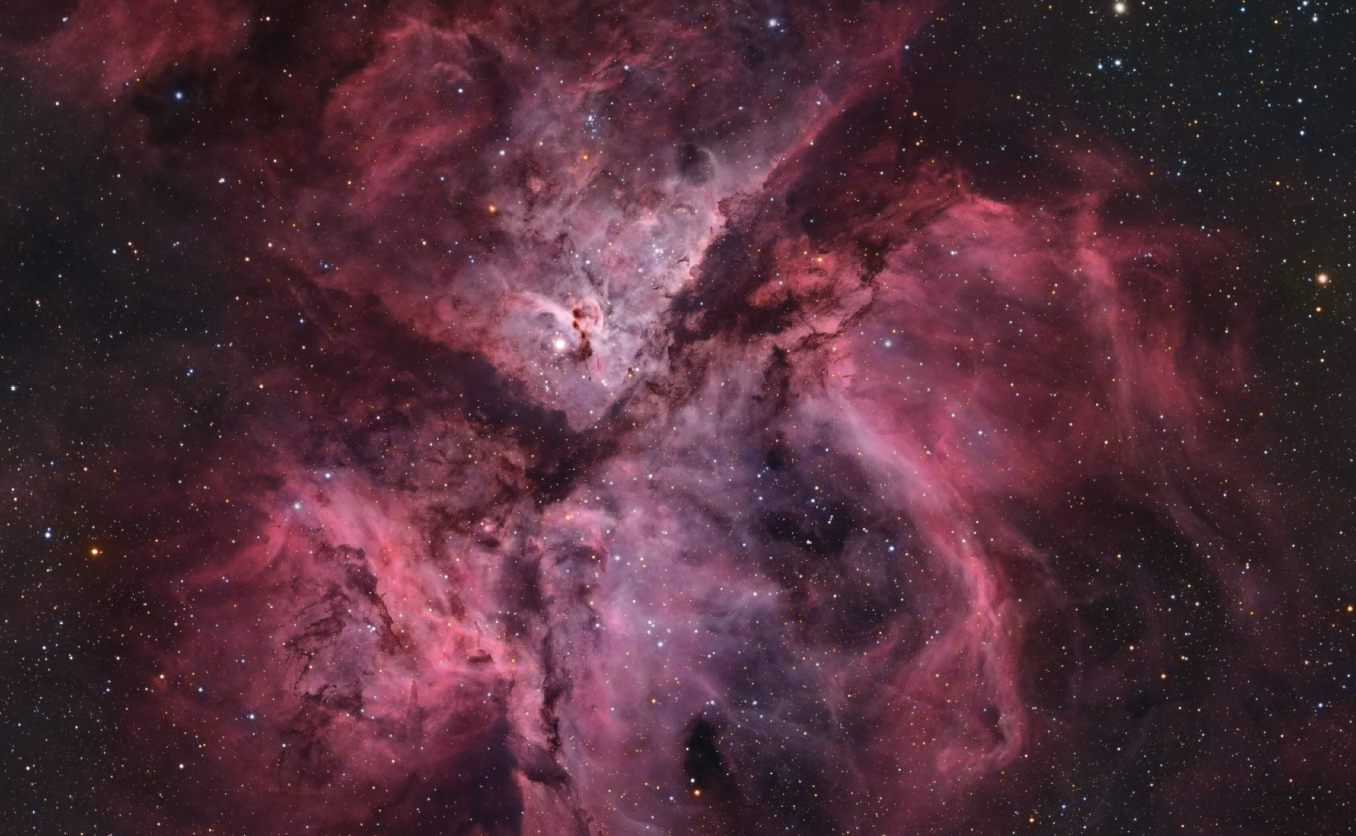
Not too far south of Canopus—and thus not visible from our latitudes—is a star known as Eta Carinae. Normally, this star appears as nondescript and dimly visible to the unaided eye. About two centuries ago, it underwent a massive eruption and, for a brief period of time in the mid-1840s, was brighter than Canopus and almost as bright as Sirius. It faded dramatically shortly thereafter, but during the past few decades, it has again brightened. It is possible it could erupt again.
Eta Carinae is embedded within a large cloud of glowing gas known as the Eta Carinae Nebula. This is the largest and brightest nebula of its type anywhere in the sky, and it can easily be seen with the unaided eye from the Southern Hemisphere.