
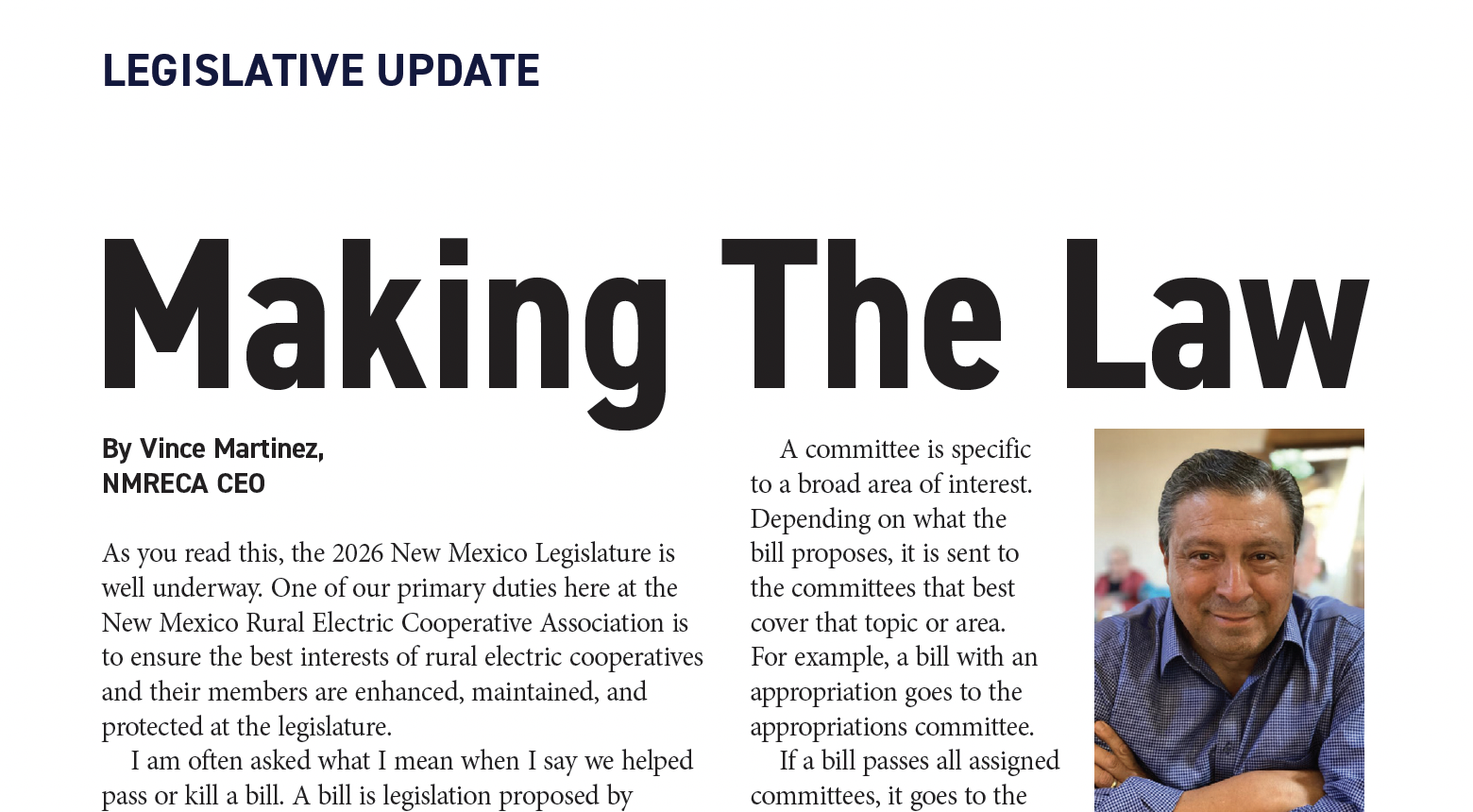
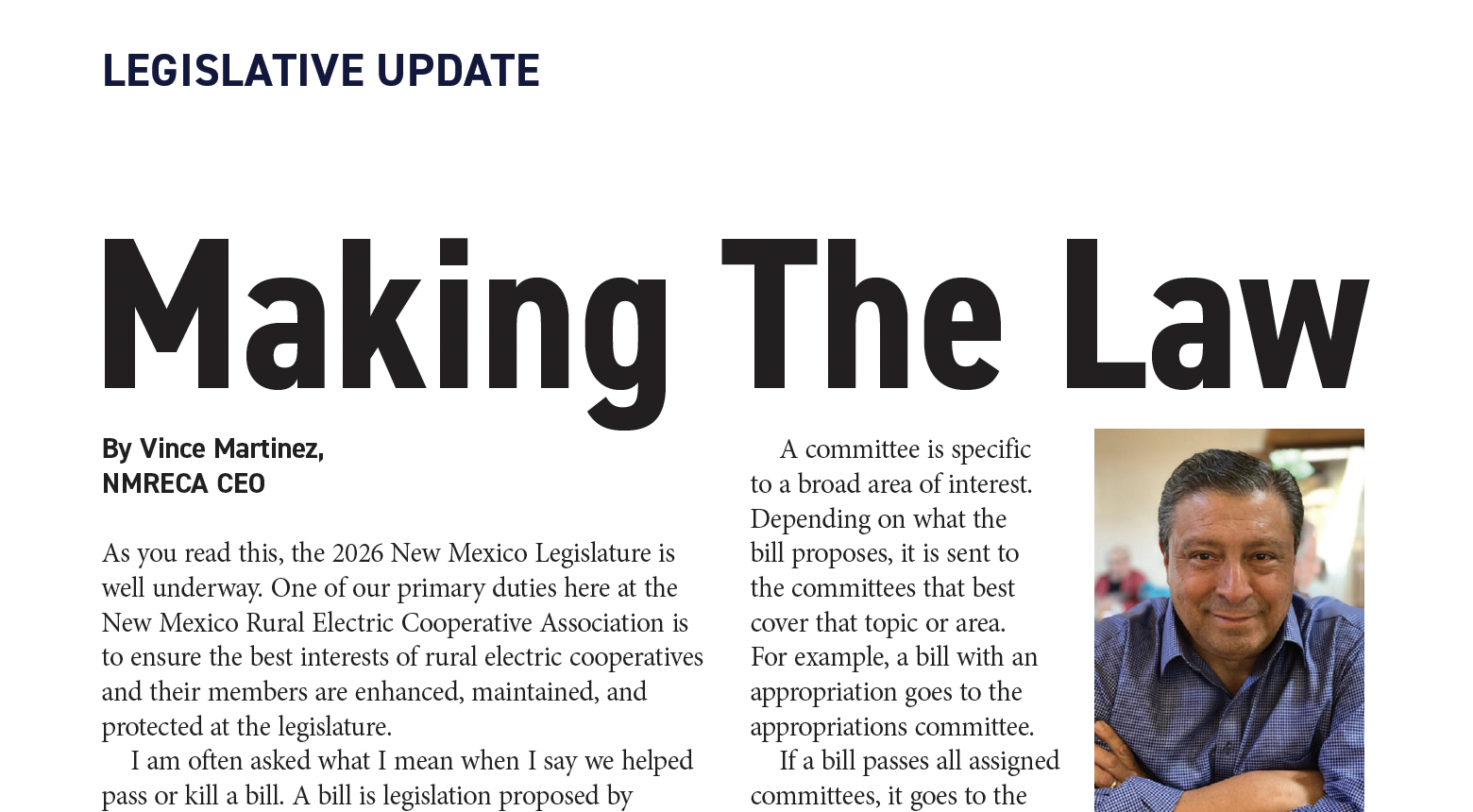
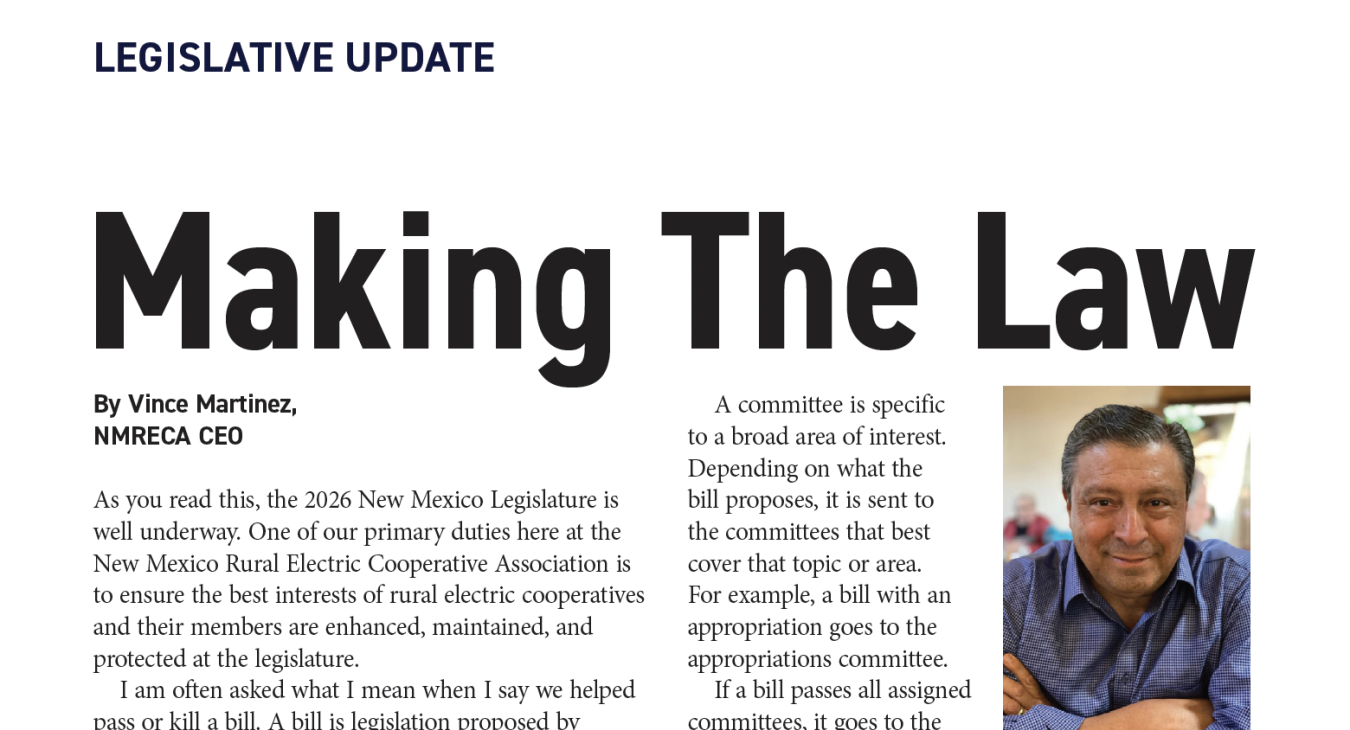
By Vince Martinez, NMRECA CEO
As you read this, the 2026 New Mexico Legislature is well underway. One of our primary duties here at the New Mexico Rural Electric Cooperative Association is to ensure the best interests of rural electric cooperatives and their members are enhanced, maintained, and protected at the legislature.
I am often asked what I mean when I say we helped pass or kill a bill. A bill is legislation proposed by a legislator, who is called the sponsor. The sponsor proposes legislation on behalf of an interested individual or group, or because they feel strongly about the issue. Passing a bill takes about nine steps from introduction to the governor’s signature. A bill can be killed at any step along the process.
A bill gets drafted by the Legislative Council Service on behalf of a legislator. The LCS is a group of attorneys and clerks who ensure proposed legislation is constitutional and written to legal standards. The LCS is overseen by a committee comprised of the leaders of the legislature from the majority and the minority.
Once a bill is drafted by the LCS and signed by the sponsor, the bill is introduced. If the sponsor is a state representative, the bill is introduced in the House. If the sponsor is a senator, the bill is introduced in the Senate.
Upon introduction, the bill is assigned to committees of the respective chambers. Most bills receive two committee assignments. The speaker makes committee assignments in the House, and the majority leader makes assignments in the Senate.
A committee is specific to a broad area of interest. Depending on what the bill proposes, it is sent to the committees that best cover that topic or area. For example, a bill with an appropriation goes to the appropriations committee.
If a bill passes all assigned committees, it goes to the floor of the House or Senate for a vote from the full chamber. If a bill passes a floor vote, it is sent to the other chamber to start the whole process over again. For instance, if a House bill is amended in the Senate and passed, the amended bill must return to the House for concurrence, and vice versa.
If both chambers pass a bill, it goes to the governor for signature or veto.
This lengthy process is why I look as old and scraggly as I do.
Track and read bills, follow committee activities and keep abreast of the daily calendar at the legislature’s website, www.nmlegis.gov.